

.svg)
How Kia Is Helping Food Go Further Across Canada
October 8, 2026

October 8, 2026
Getting fresh food to remote parts of Canada is rarely as simple as loading a truck and hitting the road. It takes coordination, flexibility and the ability to respond when the unexpected happens.
“Access is definitely one of the largest challenges in terms of getting freight to remote communities,” said Dylan Putzel, director, national third-party programs at Second Harvest. “Any kind of transportation network is very difficult to manage.”
Road networks into the North are limited and unpredictable. Finding a carrier willing to make the journey can be just as difficult. Many carriers don't have regular routes into remote communities, and when they arrive, there may be no return load waiting for them. When trucks head back empty, it makes the entire trip harder to justify financially.
This is where the support of corporate partners like Kia Canada can make a tangible difference.
Last November, Kia Communities in Motion committed $750,000 over three years to Second Harvest's national food rescue and rural, remote and Northern food distribution efforts. The funding helps Second Harvest navigate some of the difficult and unpredictable transportation costs involved in getting fresh food to communities that don't have consistent access to it.
The last mile is often the hardest mile
Even after weeks of planning and coordinating with partners along the process, the Second Harvest team is always prepared for the unexpected. Across hundreds, or even thousands, of kilometres, extreme weather can turn an already complicated journey into a race against time.
Just before the holidays last December, Second Harvest coordinated a shipment of potatoes, onions and carrots, from southern Manitoba to High Level in the far northwest corner of Alberta. When the temperatures dropped to -40°C, two trucks broke down between Saskatchewan and Manitoba, putting the food at risk of freezing.
The shipping partner's facility was closing for the day, so Second Harvest had only hours to find another solution.
With the funding support from Kia Communities in Motion, the Second Harvest team was able to mobilize a local truck quickly and the pallets were taken to a cross-dock facility in Winnipeg by midnight, then transferred to a recovery truck that travelled non-stop to Edmonton the following day.
The food kept moving.
The result: 31,000 pounds of fresh produce reached four Nations, 22 communities and two towns in a single weekend.
Potatoes, onions, and carrots store well, which means a truckload doesn't just feed a community for a day; it can nourish families for weeks during the depths of winter, or even months to come.
As Second Harvest expands its reach across Canada, the partnership with Kia Communities in Motion has been crucial to building an extensive, robust logistics network — one that can respond quickly and efficiently to more situations like this one.
A network built on shared purpose
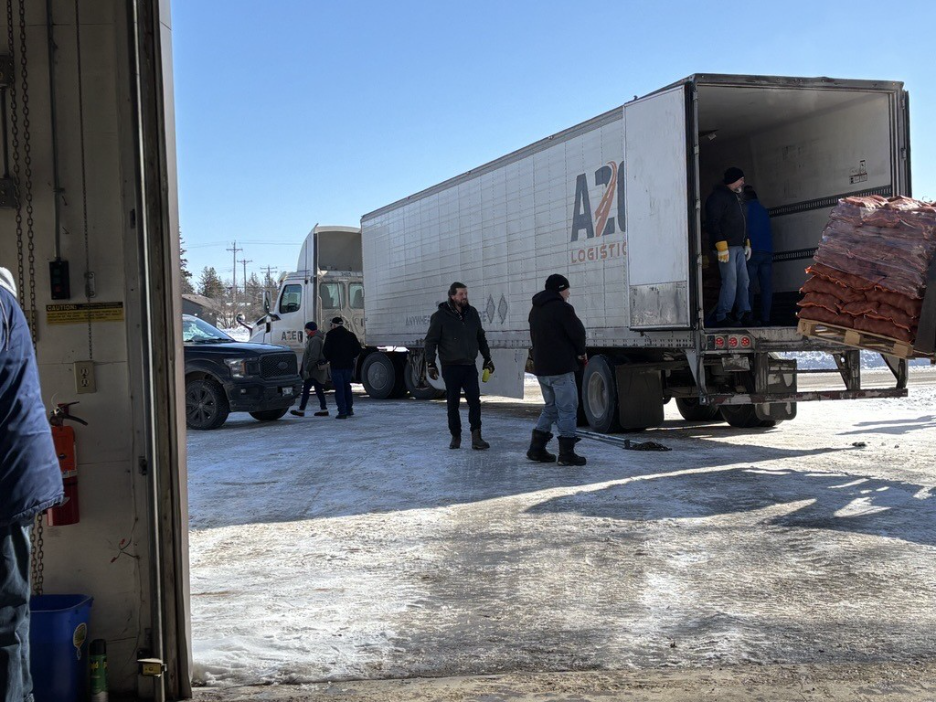
When every shipment reaches its destination, a familiar scene unfolds: the truck arrives, the doors open and volunteers climb inside to unload pallets of nutritious food. People say hello to the driver. Families arrive from across the community, while neighbours help deliver food to those who can't make it to the distribution site themselves. Sometimes, people even start cooking on-site.
When something breaks down, communities rise to meet the moment. In one case, when the equipment to unload a truck failed, a local business owner stepped in with a forklift so the distribution could continue.
It's one small example of a much bigger idea: when something goes wrong, communities find a way forward.
“It always brings a smile to my face … when the community comes together to get a truck unloaded and families fed,” Dylan said.
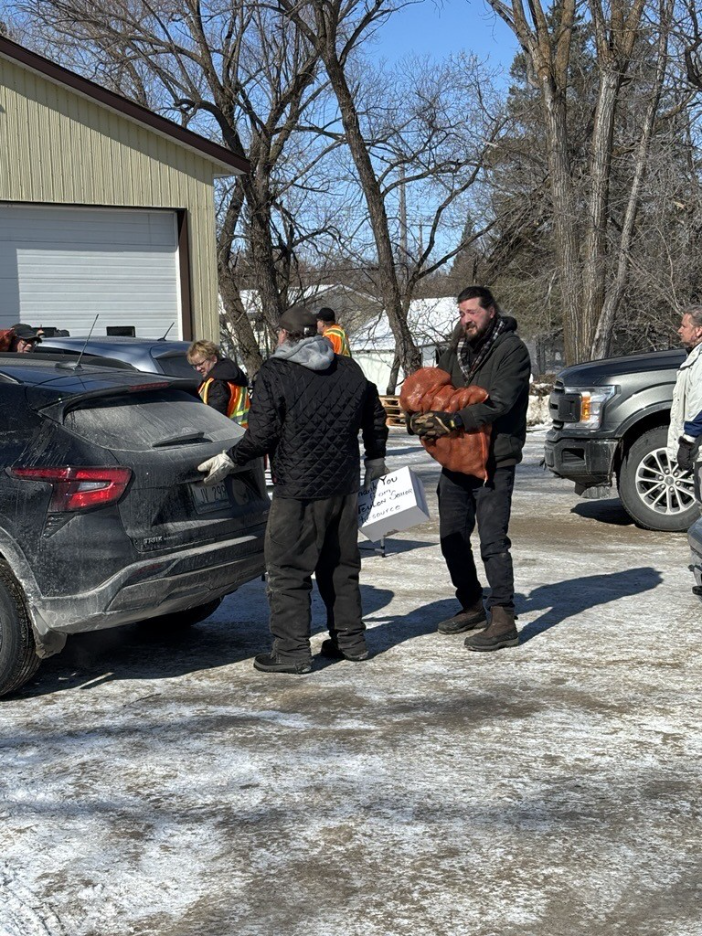
A representative from Dreams Tree Community Investments in High Level, Alberta, echoed the sentiment: "Food security is a real challenge in Northern communities, especially in winter, but people showing up for one another isn't."
It’s this spirit of collaboration that keeps the network growing: volunteers spending hours sorting and unloading food, frontline organizations working endlessly to keep families’ pantries full, and corporate partners investing in the infrastructure that makes it all possible.
“The more impact we're having, the more partnerships we're forming,” Dylan said. “And that is what's creating this incredible network that's reaching from coast to coast to coast.”


