

.svg)
Gleaning: How Surplus Harvests Become Fresh Food for Neighbours
October 9, 2026
.png)
October 9, 2026
This summer, the blueberry patch at Andrew’s Scenic Acres in Milton, Ontario, was producing a bumper crop. But a great harvest brings its own problem: the berries were ripening faster than the farm's crew could pick them.
"We could see that a lot would go to waste if we didn't pick the berries fast enough," said Matt Setzkorn, general manager of Andrews Farm Market & Winery.
That's where gleaning comes in.
Gleaning is the practice of collecting surplus crops that would otherwise go unharvested and getting that food to people who can use it. It's an old tradition, rooted in the long-standing custom of letting community members gather what remained in the fields after the main harvest.
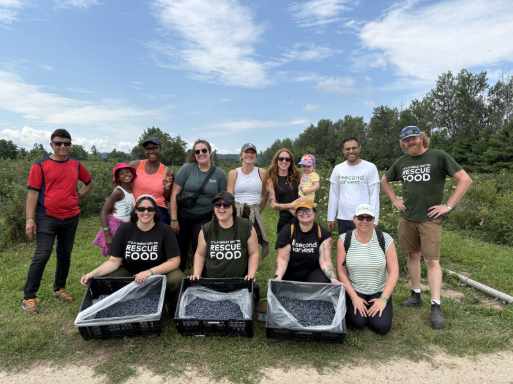
Crops get left behind for many reasons: a bumper year, a market that fell through or a crew that simply can't keep pace with ripening fruit or vegetables. The food is perfectly good. What's missing is the time and labour to pick it.
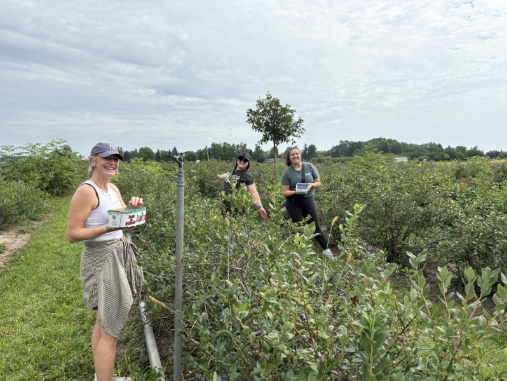
Through our From the Farm program, Second Harvest works with farmers to ensure the fruit of their labour can nourish communities instead of going to waste. Every gleaning event looks a little different, but the basics are simple.
Fresh fruit and vegetables can be expensive, and food programs often have a hard time getting them. Gleaning helps close that gap by bringing fresh, local produce to people who might not otherwise have it. It also allows farmers to connect with their communities in a meaningful way.
“It was wonderful to know that hundreds of pounds of extra fruit could be saved through Second Harvest and given to local food banks to nourish and support our neighbours who don't always have access to affordable fresh fruit,” Matt said.
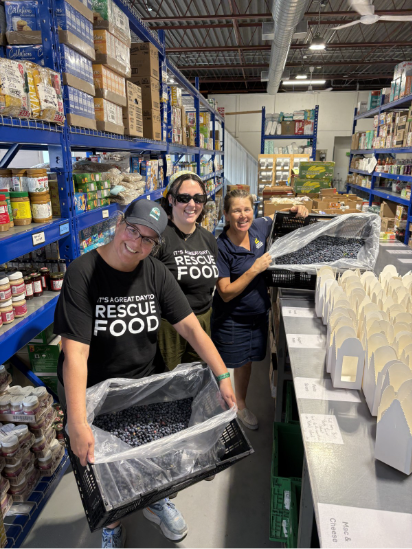
Between July and August, nearly 200 pounds of blueberries made their way from Andrew’s Scenic Acres to local organizations, including The Roxy Centre and Georgetown Breadbasket.
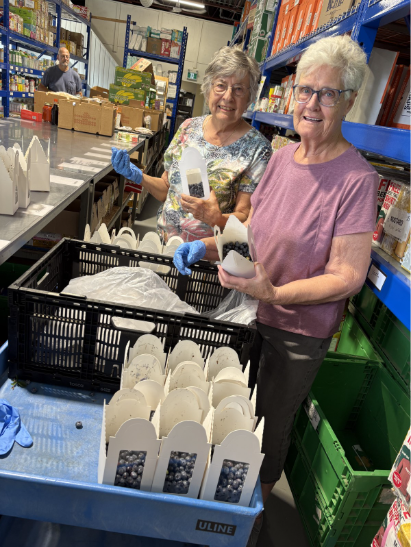
"Blueberries are such a treat! We had the perfect little boxes to package them up in to share with many of our clients," said Annette Walker, chair and food director at Georgetown Breadbasket. "They always appreciate fresh produce."
At The Roxy Centre, volunteers brought the berries in and cleaned them, then staff packed them into resealable bags to hand out to clients and made blueberry muffins with the extra.
The muffins turned up at the centre's free weekly community lunch and monthly community dinner, and the fresh berries themselves caught people by surprise.
"Many of our clients do not always have access to such fantastic berries so to just have it offered helped brighten up everyone's day," Payge Lucas, director at the Roxy Centre, said. "Sweet treats are always appreciated. Thank you for such a blessing."
Are you a farmer looking to donate? Learn more about Second Harvest’s From the Farm program!
Want to volunteer? See upcoming volunteer opportunities here.


